With the accelerated deployment of industrial automation and the Internet of Things (IoT), industrial motherboards, as core hardware carriers, are undergoing a shift from traditional standard specifications to high customization and strong compatibility. Recent product roadmaps released by major mainstream suppliers show that durability for harsh environments, real-time data processing capabilities, and flexibility of expansion interfaces have become the key dimensions of current product competition.
1. Market Status: Steady Upgrades Rather Than Radical Overhauls
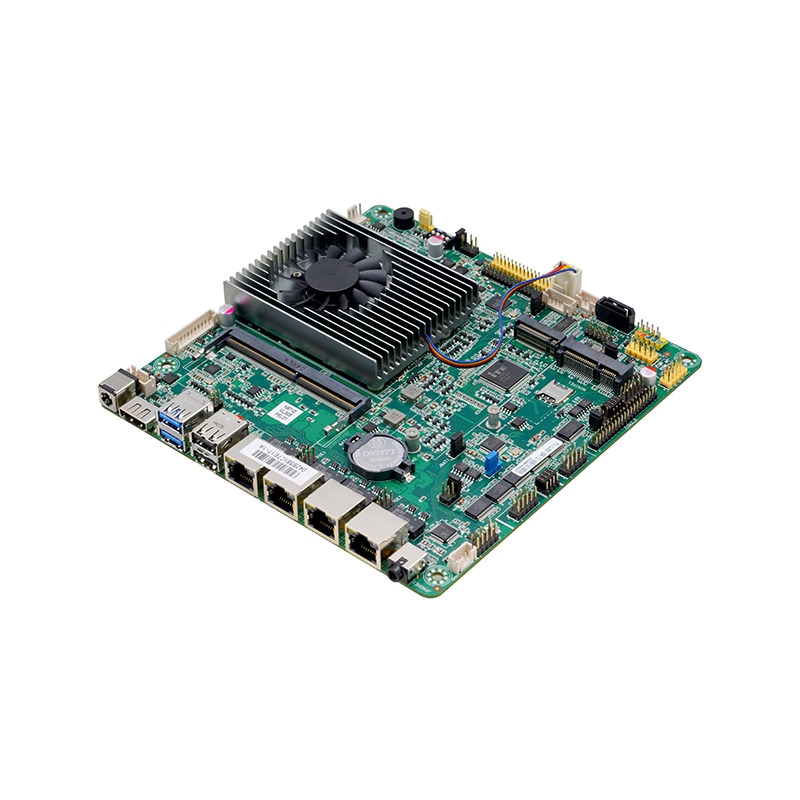
According to industry research data, the global industrial motherboard market is expected to maintain a compound annual growth rate (CAGR) of approximately 6% from 2024 to 2026. Unlike consumer motherboards that pursue rapid iteration of manufacturing processes and frequencies, industrial users focus more on long-term supply assurance and batch consistency. Standard form factors such as ATX, Mini-ITX, and PICO-ITX still account for the main shipment share, while demand for 3.5-inch and 4-inch embedded form factors has risen significantly, mainly benefiting from the miniaturization trend of intelligent transportation and medical equipment.
2. Technological Trends: More Efficient Integration and Professional Protection
Judging from recently released solutions, technological updates of industrial motherboards focus on the following aspects:
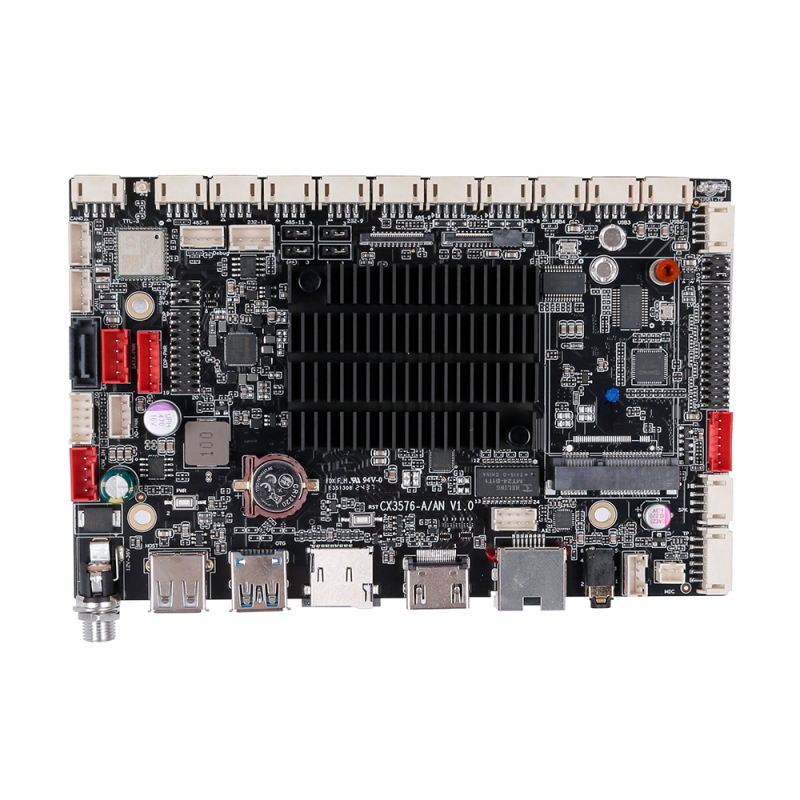
Processor Platforms: Embedded series from Intel and AMD (e.g., Elkhart Lake, Ryzen Embedded) and ARM architecture solutions are developing in parallel. The shipment volume of some localized platforms (e.g., Rockchip, Loongson) is gradually increasing in specific industry replacement projects.
Function Integration: More on-board features such as Trusted Platform Module (TPM), dual redundant power supply design, and specifications supporting a wide operating temperature range of up to -20℃~70℃ have become the baseline for product selection.
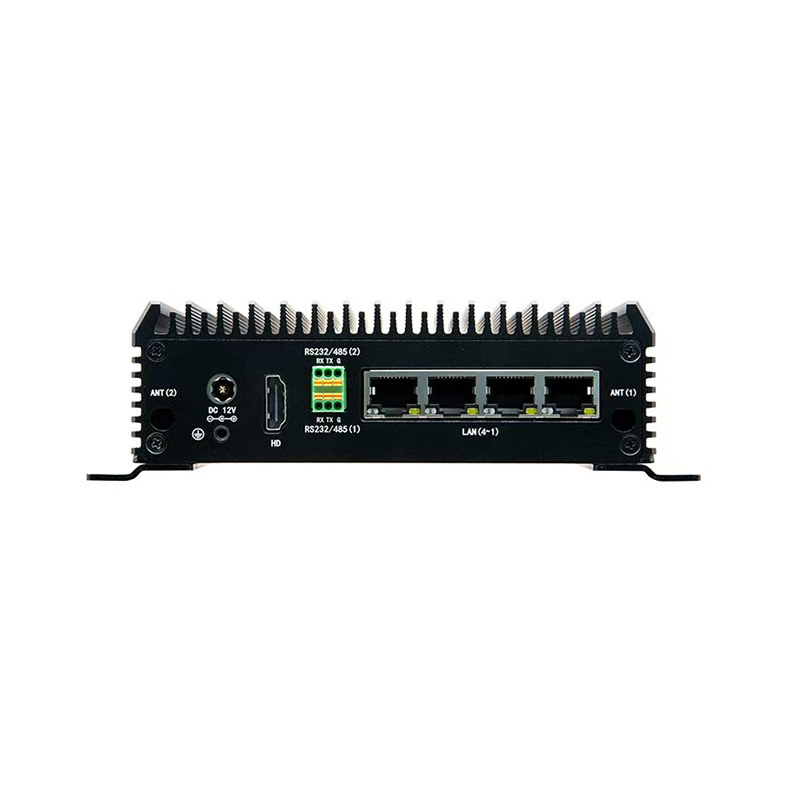
I/O and Expansion: While retaining traditional COM ports and GPIO, the proportion of integrated 2.5GbE network ports, M.2 NVMe and CAN bus interfaces has increased significantly to adapt to machine vision and field bus communication scenarios.
3. Application Drivers: Sinking of Edge Computing and AI Inference
Industrial edge nodes need to perform data screening and lightweight inference close to data sources, which requires industrial motherboards to have basic AI acceleration capabilities. Some manufacturers have integrated Neural Processing Units (NPU) or reserved AI acceleration module slots on Mini-ITX form factors for scenarios such as predictive maintenance and product appearance inspection. However, large-scale heavy-duty AI training is still completed by industrial control computers or servers, and industrial motherboards mainly undertake front-end tasks with low-latency response.
4. Supply Chain Observation: Stable Delivery Cycles Yet Persistent Cost Pressures
According to feedback from many industrial control manufacturers, the supply tightness of mainstream components such as passive components and power management chips has eased significantly since the second half of 2024, and the average delivery cycle of standard industrial motherboards has shortened to 8-12 weeks. Nevertheless, structural shortages still exist for some special interface chips and high-reliability connectors. At the same time, the costs of PCB materials and multilayer board manufacturing remain at a high level, leading to a year-on-year price increase of about 3-7% for mid-to-high-end industrial motherboards.
5. Future Outlook: Coexistence of Standardization and Customization
Industry experts point out that the industrial motherboard market will not witness a one-size-fits-all disruptive technological revolution, but will show hierarchical evolution: mass-produced equipment with fixed functions will continue to adopt low-cost standard motherboards; while projects with strict requirements for special communication, extreme environments or security and controllability will drive the development of semi-custom or fully custom form factors. In terms of OS support, in addition to Windows LTSC and common Linux distributions, the demand for adaptation to real-time operating systems such as VxWorks and QNX is also rebounding.
Conclusion
In general, as the "foundation" of intelligent manufacturing and critical infrastructure, industrial motherboards are improving their performance, reliability and adaptability at a steady rather than radical pace. For system integrators and end users, the focus of product selection should be on long-term supply commitments, operating temperature ranges and practical availability of interfaces, rather than simply comparing processor parameters. Collaborative optimization across all links of the industrial chain will remain the main tone of this niche market in the next three years.






 WhatsApp

 Teamas
